
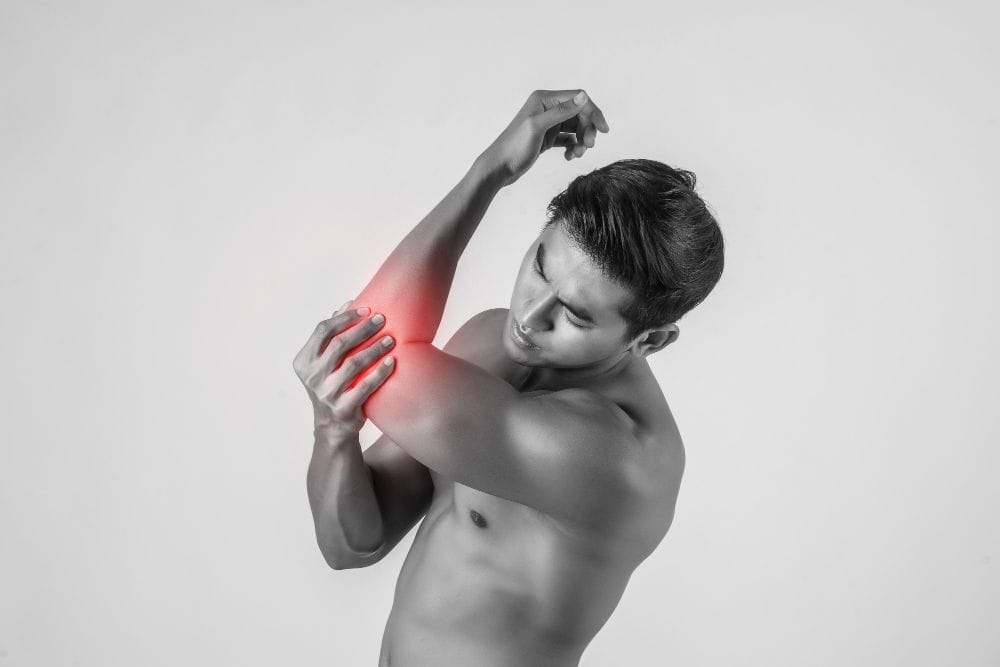
Pain after bench press is often blamed on poor form, but technique is only one part of the picture. Shoulder and elbow pain can also come from overload, tendon irritation, joint stress, nerve symptoms or a specific injury. The better question is not simply “Was my form wrong?” but “Why is this pain happening, and is it improving?”
Bench press places load through the shoulder, elbow, wrist and upper back at the same time. When one part of that chain becomes irritated, another area often compensates. This is why shoulder and elbow pain can appear together, and why pain sometimes shows up more on one side.
Bench press pain is not always a form problem
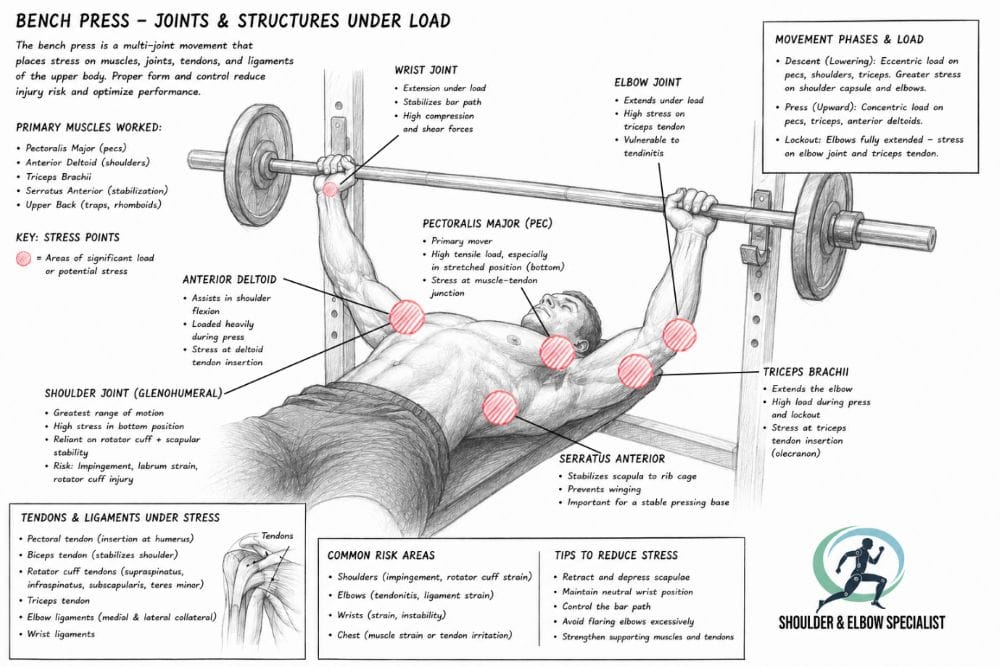
A change in training load is a common reason pain appears after pressing. This includes a sudden increase in weight, extra weekly sets, a new programme, shorter recovery time or repeated heavy sessions.
Form still matters, but it should not become the only explanation. Pain can reflect reduced shoulder mobility, previous injury, uneven strength, poor recovery, tendon sensitivity or irritation around the joint. Right-sided pain, for example, can come from dominant-arm loading or compensation rather than a problem isolated to one structure.
What shoulder pain after bench press can involve
Shoulder pain after bench press can come from several areas. The rotator cuff can become irritated, especially when pain appears while lifting the arm or pressing again. The biceps tendon can cause pain at the front of the shoulder. The acromioclavicular joint, located at the top of the shoulder, can become sore with heavy pressing. Clicking, catching or a deep ache can fit with labral irritation, especially in people with a history of shoulder instability or dislocation.
These symptoms overlap. The location of pain alone does not confirm the diagnosis. Strength, range of movement, injury history and symptom behaviour over time give a clearer picture.
You can read more about common shoulder conditions treated at Cyprus Orthopaedics.
What elbow pain after bench press can involve
Elbow pain after bench press also comes from different structures. Pain on the outside of the elbow is consistent with tendon irritation similar to tennis elbow. Pain on the inside fits with golfer’s elbow-type symptoms. Pain at the back of the elbow can relate to triceps tendon irritation or joint loading.
Numbness, tingling or symptoms travelling into the ring and little finger point towards possible ulnar nerve irritation. This deserves closer attention when it persists, worsens or affects grip strength.
More information is available on our elbow conditions page.
| Symptom pattern | What it suggests |
| Pain only during heavy sets | Load irritation or early tendon stress |
| Pain that returns every session | Ongoing irritation or an unresolved cause |
| Night pain or clear weakness | A reason for closer assessment |
| Numbness or tingling | Possible nerve involvement |
| Sudden pop, bruising or strength loss | Urgent medical advice is needed |
What you can do first
For mild pain, stop painful pressing temporarily, reduce training load and avoid testing maximum strength. Repeating the movement just to check whether the pain is still there often keeps the area irritated.
A gradual return should depend on comfort, strength and control, not a fixed number of days. If pain returns as soon as pressing resumes, the underlying cause has not been addressed.
When to consult an orthopaedic specialist
Seek urgent medical care if pain follows trauma, causes visible swelling or deformity, comes with bruising, sudden weakness, loss of sensation, fever, chest pain or severe sudden pain.
For non-urgent cases, consult an orthopaedic specialist when pain keeps returning, affects daily activity, limits training, causes weakness, or comes with numbness or tingling. A proper assessment separates tendon irritation, joint stress, nerve symptoms and referred pain.
At Cyprus Orthopaedics, we assess shoulder and elbow symptoms through clinical history, examination and imaging where needed. If your pain is persistent or you want to stay on the safer side, you can arrange a consultation to understand the cause and choose the most appropriate next step.